

Introduction: Where Mountain Legend Meets Real Adventure
Few places on Earth hold as much mystery as the Khumbu region of Nepal. Here, beneath the world’s highest peak, prayer flags snap in the wind, yak caravans cross suspension bridges, and stories of the Yeti, the elusive “abominable snowman,” are told around the tea-house stove.
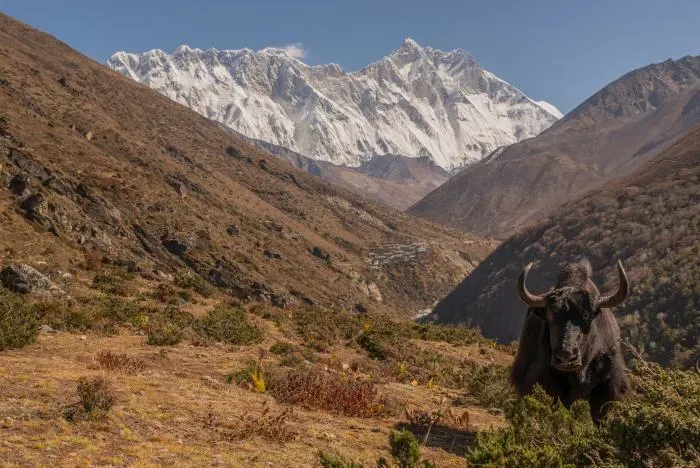
The Everest Yeti trekking trail follows the classic route to Everest Base Camp (5,364 m) through Sagarmatha National Park, a UNESCO World Heritage Site. For many trekkers, the Yeti legend adds a sense of wonder to an already spectacular journey. This guide covers the route, the best time to go, permits, altitude safety, and practical tips, so you can plan with confidence.
What Is the Everest Yeti Trekking Trail?
The trail is the well-established path from Lukla to Everest Base Camp and back. It is also the route many trekkers take to Kala Patthar (5,545 m), the best viewpoint for Everest itself. The “Yeti” in the name reflects the region’s folklore, which is woven into local culture. Along the way, you will pass monasteries, Sherpa villages, glacial valleys, and views of Ama Dablam, Lhotse, Nuptse, and Everest.
The trek is demanding but achievable for a reasonably fit walker. No technical climbing skills are required. What matters most is steady pacing, proper acclimatization, and good preparation.
The Yeti Legend of the Himalaya
The Yeti, known in Sherpa tradition as Meh-Teh or Yeh-Teh, is said to be a large, ape-like creature living in the high snows. The story reached the wider world in 1951, when mountaineer Eric Shipton photographed large footprints on the Menlung Glacier. The image sparked decades of expeditions and debate.
Khumjung Monastery, near the trail, was long said to house a Yeti scalp. Scientific examinations have cast doubt on its origin, and most researchers attribute Yeti sightings to known animals such as Himalayan bears. Still, the legend remains part of Sherpa cultural heritage, and guides often share their own stories along the trail. Whether you believe or not, it makes the walk more memorable.
Day-by-Day Everest Trek Itinerary
Most trekkers complete the route in 12 to 14 days, including acclimatization. A typical itinerary looks like this:
Day 1: Fly to Lukla (2,860 m) and trek to Phakding (2,610 m). The Kathmandu-to-Lukla flight is itself an adventure, landing on one of the world’s most famous mountain airstrips. During busy seasons, flights may depart from Ramechhap instead of Kathmandu. The first day is a gentle walk along the Dudh Koshi River.
Day 2: Phakding to Namche Bazaar (3,440 m). You cross several suspension bridges and enter Sagarmatha National Park. The climb to Namche is steep, but the reward is the Sherpa capital, a lively hillside town with cafés, bakeries, and markets.
Day 3: Acclimatization in Namche. Rest days are essential. Take a short hike to the Everest View Hotel or Khumjung village for first views of Everest, then return to sleep at the same altitude.
Day 4: Namche to Tengboche (3,867 m). The trail passes through rhododendron forest and ends at Tengboche Monastery, the region’s most important Buddhist site, with sweeping views of Ama Dablam.
Day 5: Tengboche to Dingboche (4,410 m). You move above the treeline into open, windswept valleys with dramatic mountain scenery.
Day 6: Acclimatization in Dingboche. A hike toward Nangkartshang Peak helps your body adapt to the thinner air.
Day 7: Dingboche to Lobuche (4,940 m). The path passes memorials to climbers who lost their lives on Everest, a sobering reminder of the mountain’s power.
Day 8: Lobuche to Gorak Shep (5,164 m) and Everest Base Camp (5,364 m). This is the highlight of the trek. You stand on the Khumbu Glacier, surrounded by ice, with the Khumbu Icefall above you. You then return to Gorak Shep for the night.
Day 9: Kala Patthar (5,545 m) and descent to Pheriche or Pangboche. A pre-dawn climb to Kala Patthar rewards you with a sunrise view of Everest, then you begin the descent.
Days 10 to 12: Return to Lukla. Descending is faster, and the thicker air makes the walk easier. You retrace your route, celebrating along the way.
Day 13: Fly back to Kathmandu.
Best Time to Trek the Everest Trail
The two main trekking windows are:
-
Spring (March to May): Milder temperatures, blooming rhododendrons, and the busiest season as climbing expeditions prepare for the summit. Views are often excellent, though afternoon clouds are common.
-
Autumn (late September to November): Generally clear skies, stable weather, and crisp mountain views. October is especially popular.
Winter (December to February) is cold but quiet, with very low temperatures at altitude. The monsoon (June to August) brings rain, cloud cover, and flight delays, though the lower valleys are green and lush.
Permits and Entry Requirements
Trekkers usually need two permits:
-
Sagarmatha National Park Permit, which is issued in Kathmandu or at the park entrance.
-
Khumbu Pasang Lhamu Rural Municipality Permit, which is issued locally in Lukla or on the trail.
Permit requirements and fees change from time to time, so confirm current rules with your trekking agency or the relevant Nepali authorities before you travel. You should also carry a valid passport, travel insurance that covers high-altitude trekking and helicopter evacuation, and several passport photos.
Altitude Sickness: How to Stay Safe
Altitude is the biggest challenge on this trail. Acute Mountain Sickness (AMS) can affect anyone, regardless of fitness. Symptoms include headache, nausea, dizziness, fatigue, and disturbed sleep.
To reduce your risk:
-
Ascend gradually. Above 3,000 m, avoid increasing your sleeping altitude by more than roughly 300 to 500 m per day.
-
Take acclimatization days in Namche and Dingboche, and do not skip them.
-
Stay hydrated. Drink plenty of water throughout the day.
-
Avoid alcohol and sleeping pills at altitude.
-
Listen to your body. If symptoms worsen, descend. Descending is the most effective treatment.
Consult a doctor before your trip about medication options and your personal health risks. Severe symptoms such as confusion, loss of coordination, or breathlessness at rest are medical emergencies that require immediate descent.
What to Pack for the Everest Trek
Layering is the key to comfort in the mountains. Essentials include:
-
Broken-in waterproof hiking boots and warm socks
-
Moisture-wicking base layers, a fleece, and a down jacket
-
A waterproof shell jacket and trousers
-
A four-season sleeping bag (often rentable in Kathmandu or Namche)
-
Sunglasses, sunscreen, a warm hat, and gloves
-
Trekking poles, a headlamp, and a water bottle or bladder
-
Water purification tablets or a filter
-
A basic first-aid kit and personal medications
Pack light, since porters typically carry a limited weight allowance per trekker.
Tea Houses, Food, and Sherpa Culture
Accommodation on the trail is in family-run tea houses, which offer simple rooms, shared bathrooms, and a communal dining room heated by a stove. Menus feature dal bhat (lentils and rice), noodle soups, momos, and pasta. Dal bhat is a favorite among guides for a reason: it is nutritious, filling, and often comes with free refills.
Prices rise with altitude because everything is carried up by porters or yaks, so budget accordingly. Charging devices and hot showers usually cost extra, and Wi-Fi is available in some places but unreliable.
The Sherpa people are the heart of this region. Show respect by walking clockwise around mani stones and stupas, asking permission before taking photographs of people, and dressing modestly near monasteries.
Responsible Trekking Tips
The Khumbu is a fragile environment. Help protect it by carrying out non-biodegradable waste, using refillable water bottles instead of single-use plastic, staying on marked trails, and supporting local businesses. Hiring a licensed local guide and porters also gives back to mountain communities and improves your safety.
Independent Trek vs. Guided Trek
Experienced trekkers may choose to walk independently, but a guided trek offers real advantages: local knowledge, help with permits and logistics, support during altitude problems, and cultural insight. For first-time Himalayan trekkers, a reputable, licensed agency is strongly recommended. Whichever option you choose, check that the operator follows safe acclimatization schedules and provides fair treatment and equipment for its porters.
Conclusion: Your Everest Story Begins on the Trail
The Everest Yeti trekking trail offers more than views of the world’s tallest mountain. It combines Himalayan scenery, Buddhist heritage, Sherpa hospitality, and a touch of mountain mystery. You may never spot a Yeti, but you will return with stories of your own: sunrise over Everest, the sound of monastery horns echoing through a valley, and the pride of reaching Base Camp on foot.
With careful preparation, respect for the altitude, and an open mind, this journey is within reach of many dedicated walkers. Start planning early, train consistently, choose a trusted operator, and take it one step at a time. The Khumbu will do the rest.