

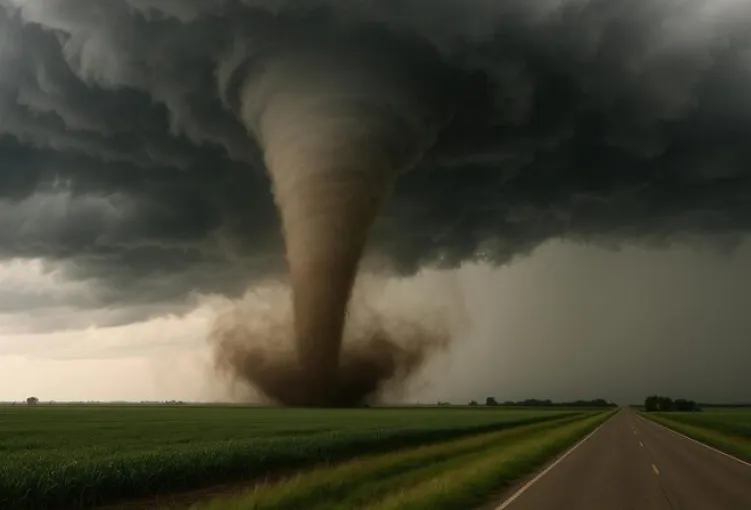
Seeing a tornado is one of the main reasons many travelers consider a storm chasing tour. Photographs and videos often show dramatic funnels beneath rotating supercells, creating the impression that every chase day leads directly to a tornado. The reality is more complex. Tornado formation depends on several atmospheric processes coming together at the right time and location. Even an organized supercell may remain non-tornadic, while a promising morning forecast can change before storms develop.
Setting realistic expectations helps guests appreciate the complete storm chasing experience rather than judging the entire tour by one possible sighting.
No Tour Can Guarantee a Tornado
The official FAQ clearly states that tornado sightings cannot be guaranteed. Professional forecasters can identify favorable conditions and guide the group toward impressive storms, but they cannot control what the atmosphere ultimately produces. Tornado development can depend on small-scale changes in wind, moisture, temperature and storm structure. These details may remain uncertain even shortly before thunderstorms begin forming.
A tour scheduled during an active part of the season may improve the opportunity to encounter severe weather. However, a favorable date should never be treated as a promise that a tornado will appear.
Understand the Difference Between Storms and Tornadoes
A supercell is an organized thunderstorm with a persistent rotating updraft. It may produce large hail, strong winds, frequent lightning or a tornado, but not every supercell becomes tornadic. Guests may spend time observing a visually impressive storm that never develops a funnel. That does not mean the chase was unsuccessful.
A non-tornadic supercell can still provide:
-
A broad rotating cloud base
-
Sculpted or mothership-style structure
-
Lightning over open countryside
-
Rain and hail shafts
-
Dramatic changes in light
-
Clear views of organized storm development
These features can be memorable for weather enthusiasts and photographers, especially when viewed across open Plains landscapes.
Multiple Chase Days Improve Opportunity, Not Certainty
Most 2027 packages provide six chase days. Tour 5A offers ten chase days, giving the team more time to work with different weather systems. Additional days may improve the chance of encountering favorable conditions because the tour is not dependent on one forecast. However, more time in the field still does not guarantee a tornado.
One day may produce a strong supercell, another may bring lightning and hail, while a later day could offer better tornado potential. The weather pattern determines how the experience develops. Guests should approach each day as a new opportunity rather than expecting every forecast to produce the same result.
Seasonal Timing Matters
The 2027 schedule covers several stages of the severe-weather season. Early May focuses mainly on the Southern Plains, while later tours follow the storm season into the Central and Northern Plains. Tour 4 runs from May 23 through May 28, a period the operator describes as one of its strongest storm chasing windows. Even during this favorable stage, the company does not promise a tornado.
Later packages may encounter isolated Central Plains supercells or active northern-season storms. June tours can be just as exciting as May tours when the weather pattern supports organized severe weather. The best approach is to choose dates based on availability, regional interest and tour length rather than assuming one week guarantees a particular outcome.
Focus on the Complete Chase Process
Storm chasing includes forecasting, long-distance travel, waiting and repositioning. Guests may spend several hours reaching a target before clouds begin developing.
The team may also leave one storm and move toward another when updated data suggests a stronger opportunity. These decisions are part of professional chasing.
A typical day may include:
-
A morning weather forecast briefing
-
Travel toward the selected target
-
Waiting for storm development
-
Watching cloud structure become organized
-
Repositioning as visibility or movement changes
-
Traveling to a new overnight location
Understanding this process can make the experience more meaningful, even when no tornado develops.
Tour 4 as a High-Opportunity Example
Tour 4 begins with arrival in Wichita on May 22, 2027, followed by six chase days from May 23 through May 28.
The package is scheduled during a highly regarded late-May storm window. It includes five hotel nights during the active chase, transportation, fuel, forecast experts, guides and drivers, weather forecast briefings and a guaranteed window seat.
Its timing may support strong severe-weather opportunities, but guests should still expect the team to follow the best available storms rather than promise one specific result.
Build Broader Personal Goals
Travelers can gain more from the tour by setting several goals instead of focusing only on tornadoes.
They may aim to photograph a complete supercell, understand the morning forecast, observe lightning over open land or experience how professional guides select a target.
These broader goals create more ways for the journey to feel successful.
Conclusion
Realistic expectations do not reduce the excitement of a 2027 storm chasing tour. They help guests appreciate how uncertain and remarkable severe weather can be.
A tornado may appear when the necessary conditions align, but a tour can still deliver impressive supercells, lightning, changing landscapes and valuable insight into professional chasing.
By focusing on the complete weather experience and understanding that no tornado is guaranteed, travelers can approach every chase day with curiosity rather than disappointment.